Friday, September 18, 2015

St. Cornelius and St. Cyprian


16/09/15

Today's Saint:


-Cornelius was elected as pope in difficult times of church
-Under him, the church stayed strong during persecution
-He worked for unity and zeal of gospel life
-Cyprian was a bishop who supported Cornelius during his papacy
-He wrote many things about unity of church as a body and head as Jesus
-Both of saints faced martyrdom
-Cornelius died in exile and Cyprian by beheading
In the middle of the third century the Church was still being suppressed. The fierce persecution of Emperor Decius claimed the life of Pope St. Fabian. The Church was without a pope for nearly a year. A holy priest of Rome, Cornelius, was elected in 251. He accepted because he loved Christ. He would serve the Church as pope even if his ministry cost him his life. That is why Pope Cornelius was so greatly admired throughout the world. The bishops of Africa were especially outspoken in their love and loyalty to the pope. Bishop Cyprian of Carthage sent him letters of encouragement and support. Cyprian had been a convert at the age of twenty-five. He had astonished the Christians of Carthage by pledging a vow of perpetual chastity before his Baptism. He had eventually become a priest and, in 248, a bishop. Bishop Cyprian greatly encouraged and supported Pope Cornelius. St. Cyprian’s writings explain the love that Christians should have for the whole Church. This love should be for the pope as well as for the local diocese and parish. Cyprian wrote a scholarly work on the unity of the Church. This remains an important topic for all times, including our own. Pope St. Cornelius died in exile at the port of Rome in September of 253. Because he suffered so much as pope, he is considered a martyr. St. Cyprian died five years later during the persecution of Valerian. He was beheaded at Carthage on September 14, 258. Together they share a feast day to remind us of the unity that the Church should always enjoy. This unity is a sign of the presence of Jesus as Head of the Church.
We can ask St. Cornelius and St. Cyprian to help us grow in our love for the Church, for the pope, bishops, priests, religious, and lay people everywhere. They can help us to be true to our Christian faith even in difficult times.

Our Lady of Sorrows


15/09/15

Today's Feast:

Our Lady of Sorrows


Our Lady had many great joys as the Mother of Jesus, but she had much to suffer, too. Her great love for her divine Son caused Mary to suffer when she saw Jesus treated cruelly by his enemies. Mary is the Queen of Martyrs because she went through spirit-ual torments greater than the bodily agonies of the martyrs. Her heart was like an altar when on Calvary she offered up her beloved Jesus to save us. What a terrible suffering it was for so loving a mother to see her Son die on the cross!  We especially remember seven occasions of great suffering in Mary’s life. The first was when she took Baby Jesus to the Temple. There the prophet Simeon told her that a sword of suffering would pierce her heart. This would be when Jesus was put to death. Her second sorrow was when she and St. Joseph had to flee to Egypt with Jesus because Herod’s soldiers were trying to kill him. The third suffering came when Mary searched three days in Jerusalem for Jesus. She finally found him in the Temple. Our Lady’s fourth sorrow was when Jesus was whipped and crowned with thorns. Her fifth great pain was caused by seeing him lifted on the cross, where he died after three hours of agony. Mary’s sixth sorrow was the moment when Our Lord’s lifeless body was placed in her arms. And her seventh suffering came when he was buried in the tomb.  Mary did not pity herself or complain because she had to suffer so much during her life. Instead, she offered her sorrows to God for our sakes. She is our Mother. Because she loves us dearly, she was happy to suffer along with Jesus her Son, so that we might some day share her joy with Jesus in heaven.  

  In honor of Our Lady of Sorrows, today we can offer up some little sacrifice without complaining. We can also think about each of the seven sorrows of Mary and thank her for her great love for us.

Monday, September 14, 2015

Exaltation of the Holy Cross


14/09/15

Today's Feast:

Exaltation of the Holy Cross


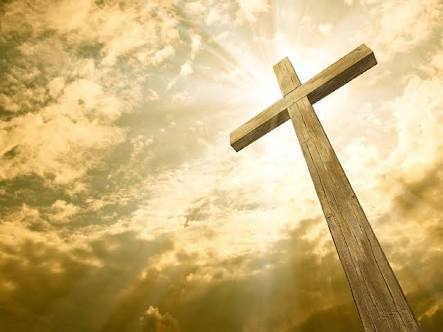
Today we celebrate our gratitude and love for Jesus through our respect for his cross. The cross was once the greatest symbol of shame. Death by crucifixion was reserved for the lowest of criminals. Jesus took on the suffering of the cross in order to obtain our salvation. With that suffering came shame.  By his death on the cross, Jesus has made it a symbol of eternal life and glory. The cross has become the most sacred Christian symbol. When the cross has the image of the suffering Christ on it, it is called a crucifix. The crucifix on our bedroom wall and the crucifix or cross we wear around our neck are reminders for us that Jesus paid a price for our salvation.  For centuries, relics of the true cross have been cherished by devout Christians. It is believed that Emperor Heraclius recovered pieces of wood from the cross of Jesus in 629. He and his group of pilgrims honored the relics and invited all the people in the area to join them. Even before that time, Christians honored and loved the symbol of the cross.  The word “cross” can also mean the sufferings that come our way. When we accept them lovingly and with patience, as Jesus did his cross, we become “cross-bearers” like Jesus.  

  Let’s consider what the symbol of the cross means to us Christians. We might like to say the following short prayer today: We adore you, O Christ, and we praise you, because by your Holy Cross you have redeemed the world.

St. John Chrysostom


13/09/15

Today's Saint:

St. John Chrysostom


-Born in Antioch
-His father died when he was young
-Mother didn't marry second time and spend time to help him grow
-This help him to be a learned man and good speaker
-Became priest and then bishop
-Preached the people about Jesus and faith
-Spoke against sins, even about deeds of empress
-Put in exile by empress
-Died because of lack of food and rest
-He was happy to suffer for Jesus and to stand firm for truth

St. John Chrysostom was born in Antioch around 344. His father died when he was a baby. His mother chose not to marry again. She gave all her attention to bringing up her son and daughter. She made many sacrifices so that John could have the best teachers. He was very intelligent and could have become a great man in the world. When he gave speeches everyone loved to listen to him. In fact, the name Chrysostom means “Golden-mouthed.” Yet John wanted to give himself to God. He became a priest and later was made bishop of the great city of Constantinople.  St. John was a wonderful bishop and accomplished a tremendous amount of good. He preached once or twice every day, fed the poor, and took care of orphans. He corrected sinful customs and stopped bad plays from being performed. He loved everyone, but he was not afraid to tell even the empress when she did something wrong.  Because he fought sin, St. John had enemies, even the empress herself. She had him sent away from Constantinople. On the trip he suffered greatly from fever and from lack of food and sleep. Yet, he was happy to suffer for Jesus. Just before he died, he cried out, “Glory be to God!”  St. John died in Turkey on September 14, 407. A terrible hailstorm fell on Constantinople when he died. Four days later, the empress died, too. Her son honored St. John’s body and showed how sorry he was for the harm his mother had done.  

  God knows us better than we know ourselves. If we do everything as well as we can for him, then we don’t have to be afraid of what others say or do against us. We can ask St. John Chrysostom to give us courage.

Feast of the Holy Name of Mary


12/09/15

Feast of the Holy Name of Mary 


Feast Day: September 12th


The Roman Catholic Church celebrates the Feast of the Holy Name of Mary, on September 12th in honor to the name of Mary, the mother of Jesus.  This feast day has been celebrated since 1684 when Pope Innocent XI officially included it in General Roman calendar, but actually dates back to 1513 as local celebrations were held in Spain.   

The entry in the Roman Martyrology about the feast speaks of it in the following terms, “The Holy Name of the Blessed Virgin Mary, a day on which the inexpressible love of the Mother of God for her Holy Child is recalled, and the eyes of the faithful are directed to the figure of the Mother of the Redeemer, for them to invoke with devotion”. 

Before the Battle of Vienna in 1683, John III Sobieski placed his troops under the protection of the Blessed Virgin Mary.  In the following year, to celebrate the victory, Pope Innocent XI inserted the feast into the General Roman Calendar, assigning to it the Sunday within the octave of the Nativity of Mary, which falls on September 8th. 

To honor the name of Mary, this Blessed Virgin Mary, Mother of Jesus our Savior – we continue the tradition set many centuries ago, by our forefathers.  There is wisdom in honoring the mother of Jesus, the virgin named Mary – as she is our spiritual mother as well.  She will lead you to her Son.

Saturday, September 12, 2015

St. Lawrence Justinian


11/09/15

Today's Saint:

St. Lawrence Justinian


-Born in Italy
-Very zealous believer from young age
-Joined in congregation of St. George
-Assigned to find money for the monastery
-Begged to earn money for his fellow beings
-He was spiritually good that many came to get his advice
-He was very humble man
-He became a bishop
-He was very generous and helped poor and needy

Lawrence was born in Venice, Italy, in 1381. His mother sometimes thought her son was aiming too high. He always told her that he wanted to become a saint. When he was nineteen, he felt he should serve God in a special way. He asked the advice of his uncle, a holy priest of the community of St. George. “Do you have the courage to turn down the delights of the world and to live a life of penance?” asked his uncle. Lawrence was quiet for a long time. Then he looked up at a crucifix and said, “You, O Lord, are my hope. In this cross there is comfort and strength.”  His mother wanted him to marry, but Lawrence joined the community of St. George. His first assignment was to go out among the people of his city and seek donations for the support of the community. Lawrence was not ashamed to beg. He realized that the offerings of money or goods would help God’s work. He even went in front of his own home and asked for donations. His mother would try to fill up his sack with food so that he could go back to the monastery early. But Lawrence would only accept two loaves of bread and then would be off to the next house. In this way, he learned how to make little acts of self-denial and grew very dear to God.  One day a friend of his came to try to persuade Lawrence to leave the monastery. Instead, the saint spoke of how short life is and how wise it is to live for heaven. His friend was very impressed and was persuaded to become a religious himself.  Later, Lawrence was made a bishop. His people soon learned what a kind and holy man their bishop was. Crowds came to him for help every day. Bishop Lawrence became known for his works of charity and his success as a peacemaker. When he was dying, he would not lie on a comfortable bed. “That shall not be!” he exclaimed humbly. “My Lord was stretched out on a hard and painful tree.” St. Lawrence Justinian died in 1455.

  Let us pray for priests, that they’ll be full of faith and love in their service of God’s people, the Church. We can ask God to give them consolation, strength, and joy.

Friday, September 11, 2015

St. Nicholas of Tolentino


10/09/15

Today's Saint:


St. Nicholas of Tolentino


-Born in Italy
-His birth was after long prayers by his parents
-Decided to become priest from young age
-Got inspired by preaching of an Augustinian priest
-Joined in Augustinian monastery and became priest
-Assigned to parishes
-Preached gospel in public places
-Took care of poor and sick people
-Performed miracles
-Brought repentance to people

Nicholas was born in 1245 in Ancona, Italy. His parents had waited long and anxiously for a child. Nicholas was the answer to their prayers and a pilgrimage the couple had made to the shrine of St. Nicholas of Bari. The couple was so grateful to the saint that they named their baby after him.  When the boy grew up, he talked about becoming a priest. He was prayerful and wanted to live close to God. Friends of his family wanted him to be a priest in a wealthy parish where Nicholas would be promoted. Nicholas didn’t say much, but he quietly searched and prayed. One day he slipped into a church. A fervent Augustinian priest was preaching a sermon. He said: “Don’t love the world or the things of this world because this world is passing away.” Nicholas thought about this. He went away with the words dancing in his head. He realized that God had used that preacher to touch his own life. He became convinced of the importance of preaching God’s Word. He made up his mind to ask to join the same Order to which that priest belonged.  The Order was the Augustinian Friars and the priest was Father Reginald, who became his novice master. Friar Nicholas professed his vows when he was eighteen. Then he began his studies for the priesthood. He was ordained around 1270. Father Nicholas performed his preaching ministry in various parishes. Then while praying in church one day, he seemed to hear a voice saying: “To Tolentino, to Tolentino. Stay there.” Shortly afterward, he was assigned to the town of Tolentino. He spent the remaining thirty years of his life there.  There was great political unrest in those times. Many people did not come to church to hear the Word and to worship the Lord. The friars of St. Augustine decided that preaching in the streets was necessary. St. Nicholas was chosen to be part of this initiative. He preached in outside gathering places willingly. People listened and many repented of their sins and lack of caring. They led better lives. Father Nicholas spent hours in the poor areas of Tolentino. He visited the lonely. He brought the sacraments to the sick and dying. He took care of the needs of children and visited prisoners. Miracles were reported while St. Nicholas was still alive. He once touched a diseased child and said, “May the good God make you well,” and the child was cured.  St. Nicholas of Tolentino was sick for about a year before he died on September 10, 1305. He was proclaimed a saint by Pope Eugene IV in 1446.  

  St. Nicholas of Tolentino was an answer to his parents’ prayers. Because he listened to the call of God in his heart, he was able to help many people find the Lord. We can ask St. Nicholas of Tolentino to help us be good listeners to the voice of God.